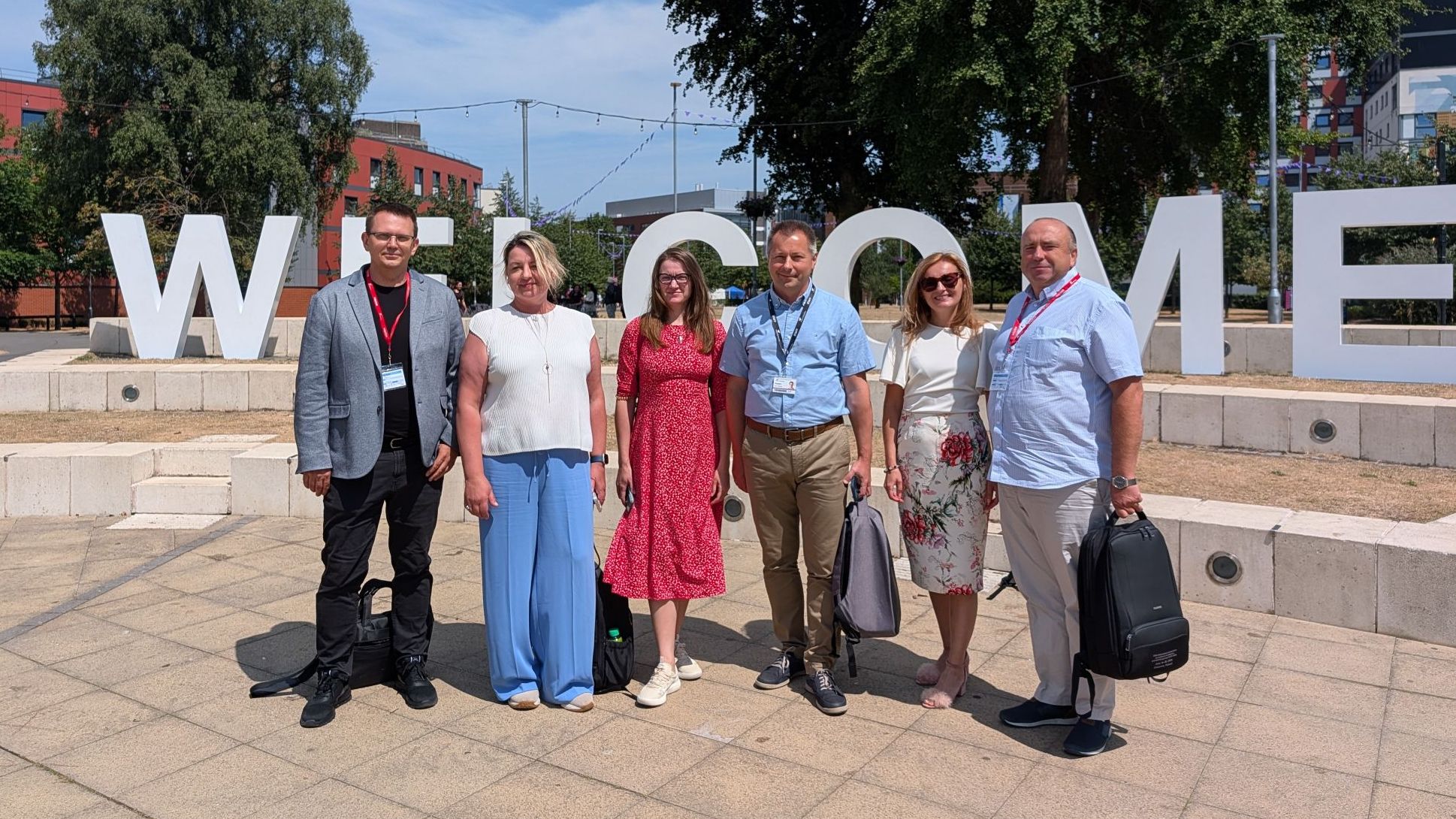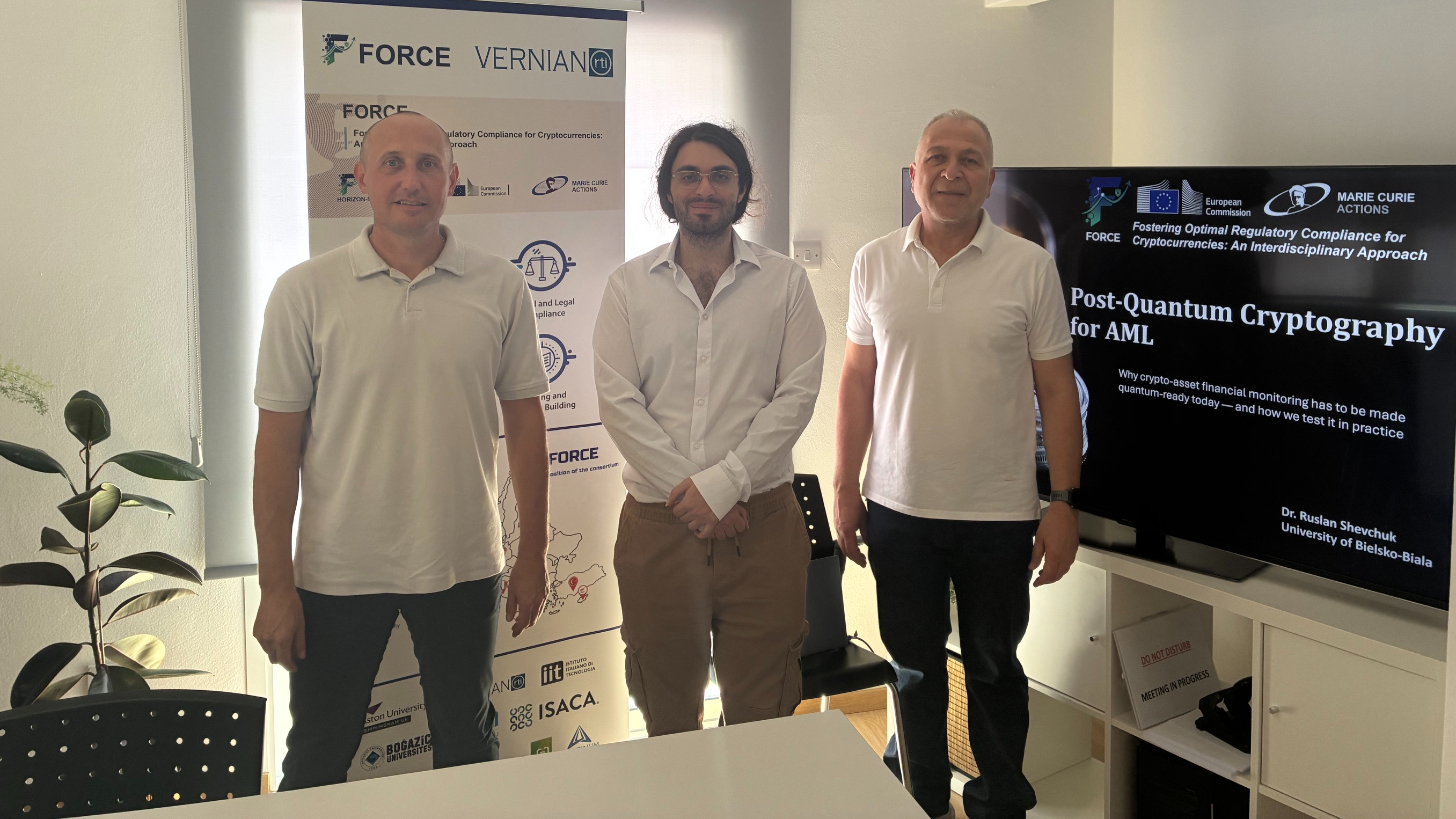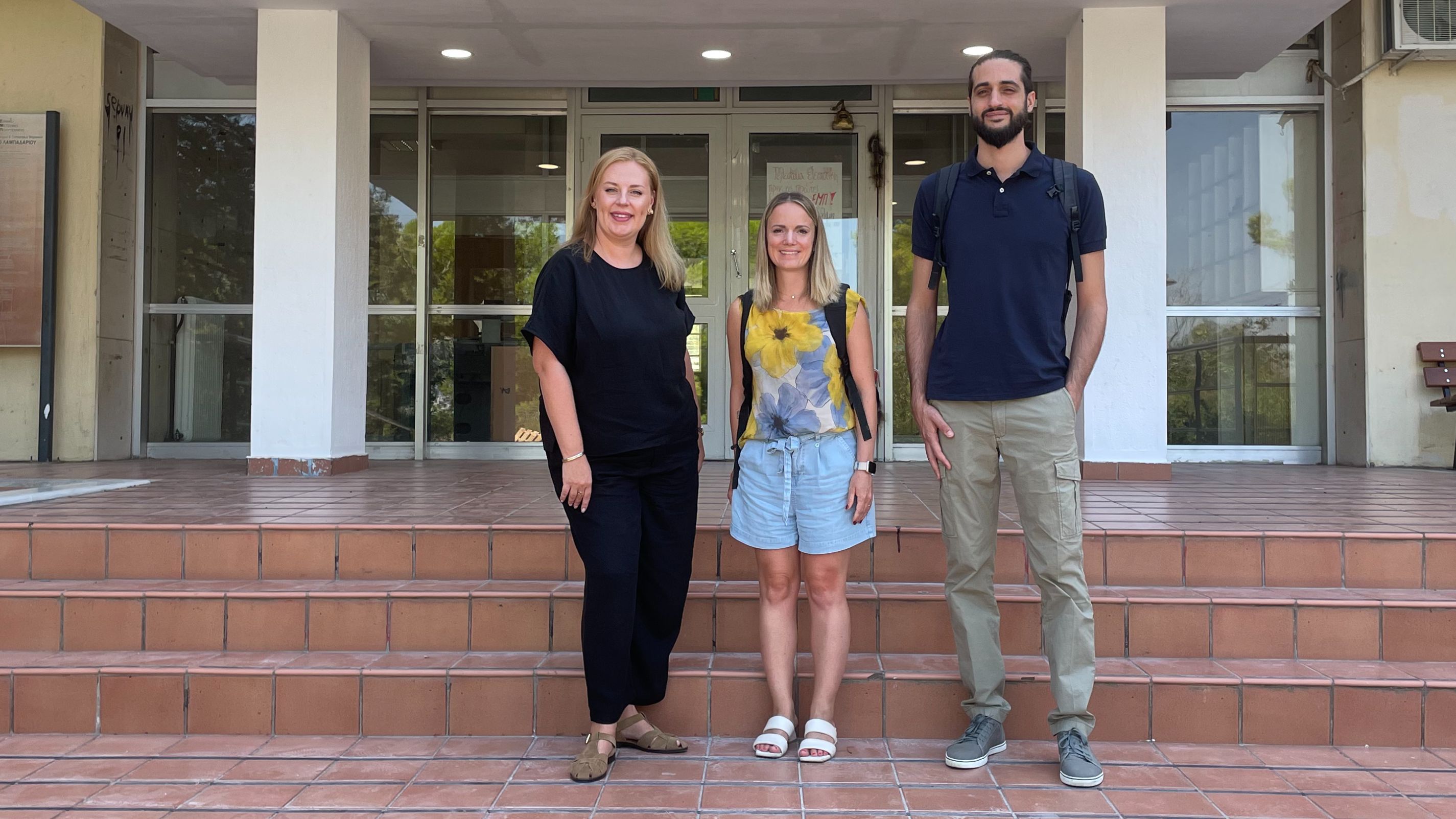
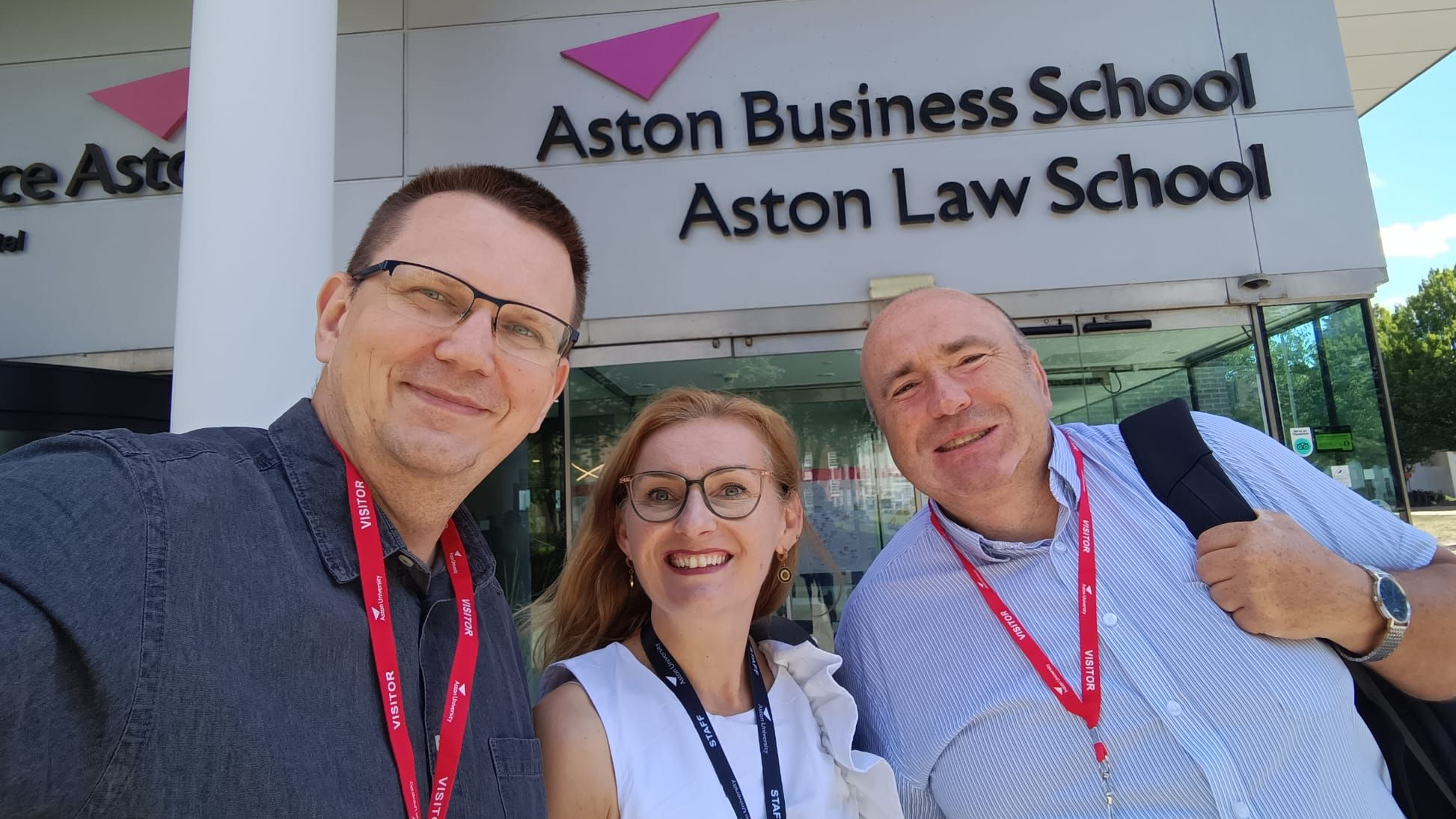
During July 2026, Prof. Vasyl Martsenyuk and Dr. Marcin Bernaś from the University of Bielsko-Biala completed a one-month research secondment at Aston University within the framework of the FORCE project. The mobility was conducted as part of WP2: Blockchain Analytics & AI for Anti-Money Laundering and supported Task 2.1 – Blockchain Data Collection and Preprocessing and Task 2.2 – AI Model Development for Anomaly Detection.
The secondment focused on strengthening scientific collaboration between Aston University, the leader of WP2, and UBB, which is responsible for the preparation of Deliverable D2.2 – AI Models for Transaction Anomaly Detection. During the research stay, the participants jointly advanced methodologies in blockchain analytics, artificial intelligence, and explainable anomaly detection for cryptocurrency ecosystems.
A major part of the work involved collecting, harmonising and preprocessing large-scale blockchain datasets from the Bitcoin and Ethereum networks. The researchers developed common workflows for data cleaning, feature engineering and quality assessment, creating a robust basis for AI-driven analysis across multiple blockchain environments. In parallel, they evaluated state-of-the-art machine learning approaches - including Graph Neural Networks and Transformer architectures - for detecting suspicious transaction patterns relevant to anti-money laundering applications.
An important scientific achievement of the secondment was the development of a hybrid modelling framework that combines mechanistic blockchain dynamics with artificial intelligence. Prof. Martsenyuk contributed to extending digital-twin-inspired models of Bitcoin and Ethereum networks, enabling anomaly detection through deviations between predicted and observed blockchain behaviour. At the same time, Dr. Bernaś concentrated on the comparative evaluation of AI architectures, analysing their effectiveness across diverse blockchain datasets and defining a baseline methodological framework for future AML algorithms.
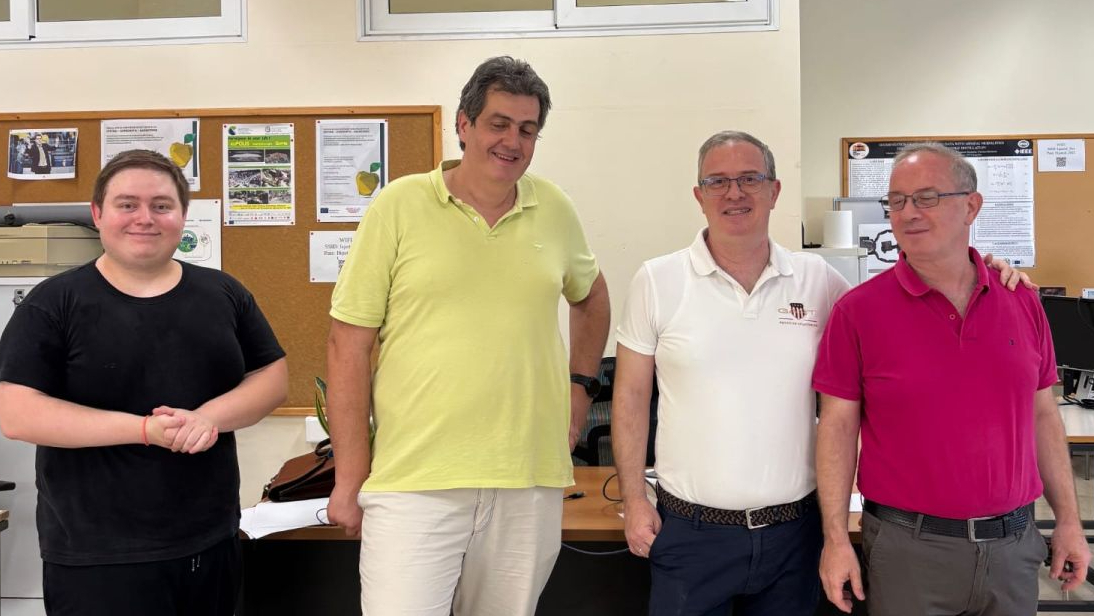
The mobility also included intensive knowledge exchange with researchers at Aston University through technical workshops, research meetings, and methodological discussions. These activities strengthened cooperation between the partner institutions, supported the alignment of research methodologies within WP2, and identified opportunities for future joint publications and conference contributions. As a direct outcome of the collaboration, the partners plan to prepare at least one joint scientific publication presenting the developed blockchain anomaly detection methodologies and AI-based solutions.
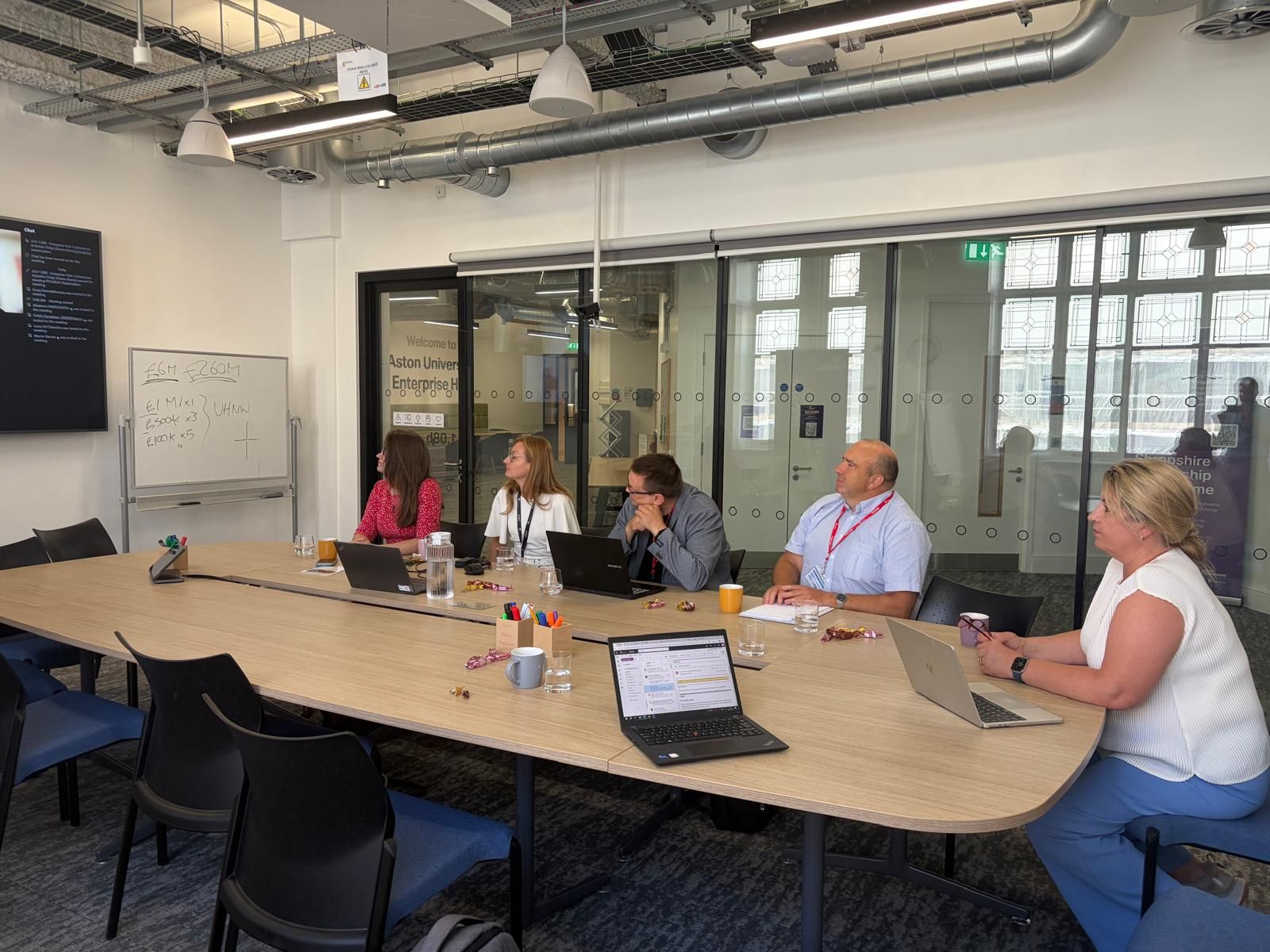
An important milestone of the secondment was the FORCE project meeting held at Aston University on 16 July 2026. The meeting brought together representatives of the project partners to review the progress of ongoing work packages, discuss the status of project deliverables, and coordinate the next stages of implementation. UBB representatives actively contributed to the discussions, presenting the progress achieved within WP2 and exchanging ideas on future research directions. The meeting further strengthened cooperation among the consortium partners and ensured close coordination of scientific activities across the FORCE project.
The July secondment significantly contributed to the implementation of the FORCE project by providing important methodological foundations for Deliverable D2.1 – Blockchain Data Collection and Preprocessing Report and Deliverable D2.2 – AI Models for Transaction Anomaly Detection. It also reinforced long-term collaboration between Uniwersytet Bielsko-Bialski and Aston University in the areas of blockchain analytics, trustworthy artificial intelligence, cybersecurity, and financial crime detection.
The participants of the secondment would like to express their sincere gratitude to the Aston University team for their hospitality, valuable scientific collaboration, and support throughout the research mobility.